
Switzerland alone
Richard Law, UTC 2026-05-22 18:05
Last Monday, 18.05.2026, the Neue Zürcher Zeitung (NZZ) told us that the Federal Government had taken wegweisende Entscheide, 'strategic decisions', about security. A bit of a surprise to dispassionate observers, since Martin Pfister, the current Defence Minister, appears to have no idea himself why, how, with what and against whom Switzerland needs to defend itself.
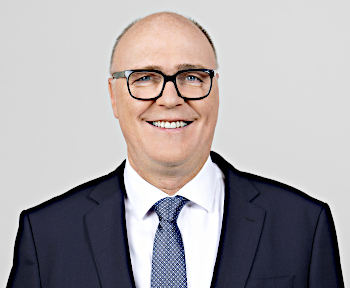
Bundesrat Martin Pfister, Image: Schweizerische Bundeskanzlei.
Such vacuity is not surprising, since Pfister belongs to the party Die Mitte, 'The Middle', the reincarnation of the tribalist Catholic CVP party, which identifies itself not by any particular policy directions but by a triangulation which puts it in the limp-wristed 'middle'. My own prejudice is that any person identifying with a meaningless squish called 'The Middle' is in need of professional help.
The NZZ lead-in displays an optimism that is not justified by the facts of the matter, since Pfister, who has no convictions himself – or if he has, is not prepared to go into the ring for them – has gone round the organs of government asking them what they think about it all: an absurd piece of pointless triangulation, since we would hope that the man now in charge of the Swiss army – a former Colonel therein, no less – had some thoughts of his own on the current situation.
The NZZ has obtained some of the documents produced in the course of this consulation process. The result:
The documents of recent months and years portray a picture of a body, which over central themes such as the threat situation is divided. Even the question of what capabilities the Army should have seems to be controversial. In the end, it seems, the great strategic debate turns on the most profane of all subjects: the question of how to pay for it all.
Die Dokumente der letzten Monate und Jahre zeichnen das Bild eines Gremiums, das sich bei zentralen Themen wie der Bedrohungslage uneinig ist. Auch die Frage, welche Fähigkeiten die Armee haben solle, scheint umstritten. Am Ende, so wirkt es, dreht sich die grosse strategische Debatte in erster Linie um das profanste aller Themen: die Frage, wie das alles bezahlt werden soll.
At the end of last year, the Bundesrat, the Federal Council = the Swiss Government, declared that Switzerland over several decades has never faced such a variety of threats as it does today. Which is sort of true as far as it goes, but which starts at the wrong end of the problem.
The wrong end of the problem is this: if you just list the immense variety of weapons that advances in technology have produced in the last half-century, from cheapo drones to hypersonic missiles, and then list the means to counter them, you are already a long way down the road to a nervous breakdown. All these threats are to some debatable degree possible.
Furthermore, the realist thinks: only twenty years ago the situation looked quite different, politically, economically and above all technologically. How can we possibly know what the situation will be like in twenty years, when today's weapons systems are just starting to leave the factory, already half-obsolete?
If you then factor in the Alinsky-style cultural rot that is undermining almost all the countries of the West – Switzerland included – you end in a state of frantic despair. Young Swiss people have got out of the habit of soldiering, in the manner of the proud militia army from the fifties. The loyalty and the patriotic cohesion of the newcomers to the country cannot be relied upon. Better to talk about something else – climate change, for example, or microplastics or … whatever. What small country, forced by its constitutional neutrality always to stand alone, can defend itself against modern weapons?
In the responses from the various government departments in this triangulation exercise, the most realistic came from the Socialist Party's Beat Jans:
Even more clearly the Justice and Police Ministry under Beat Jans criticised the strategy. It contained too much military jargon – and above all: Switzerland cannot defend itself alone. A potential enemy would be inevitably overwhelmingly more powerful – or who is the Defence Ministry thinking of: Austria? With this rhetorical question Jans' Ministry aims at a delicate subject: neutrality. His Ministry asserts that Switzerland can defend itself only in an alliance, but the politics of neutrality sets here narrow limits. His conclusion: 'Thus we simply carry on as though the independent defence were a realistic option.'
Noch deutlicher rügt das Justiz- und Polizeidepartement von Beat Jans die Strategie. Sie enthalte zu viel militärischen Jargon – und überhaupt: Die Schweiz könne sich nicht allein verteidigen. Ein potenzieller Gegner werde zwangsläufig übermächtig sein – oder wen sonst habe das VBS im Blick: «Österreich?» Mit dieser rhetorischen Frage zielt das Departement von Jans auf ein heikles Thema: die Neutralität. Das Departement schreibt nämlich, die Schweiz könne sich faktisch nur im Verbund verteidigen, doch neutralitätspolitisch gebe es hier enge Grenzen. Sein Fazit: «Deshalb tun wir halt einfach so, als ob die eigenständige Verteidigung eine realistische Option wäre.»
It pains me to have to agree in any way with such an innately mad socialist, but, unlike his government colleagues, Jans has got hold of the right end of the stick. Abandoning the neutrality doctrine, which worked well in the patchwork quilt of Europe for the century after the establishment of the modern Switzerland (1848 to 1950) would be a step forward.
From the French Revolution in 1789, following which Napoleon Bonaparte kicked over the chess pieces of the established order in Europe, until the establishment of Switzerland as a constitutional state in 1848, Europe was in almost continuous turmoil: revolutions, repression and wars. In 1848, surrounded by a patchwork quilt of countries in varying degrees of upheaval, standing aside from the turmoil was a wise option for the Swiss – a pox on all your houses! At that time Switzerland's neighbours were France, Germany, Austria and Italy. Pick a friend and you will also pick an enemy at the same time.
But here we are in 2026 and things have changed. Jans is a politician, so his being combative and attacking the neutrality doctrine is really just a way of sticking it to the diehard Swiss that support his great political enemy, the Schweizerische Volkspartei (SVP), a tribe of nostalgics who are easy to mock. In just engaging in political jousting, he fails to carry his thinking beyond the attack on the totemic doctrine of neutrality. For if he is now recommending that Switzerland align itself with allies the question arises: who?
The logical answer is the European Union. Since the EU surrounds Switzerland on every side, a union with a non-EU country would be asking for trouble. Any non-EU country wanting to invade Swizerland has to cross a lot of EU territory before it arrives at plucky little Switzerland's frontier. It seems unlikely that the EU will look on passively while this enemy acquires control of all the transport infrastructure that links so much of the EU together.
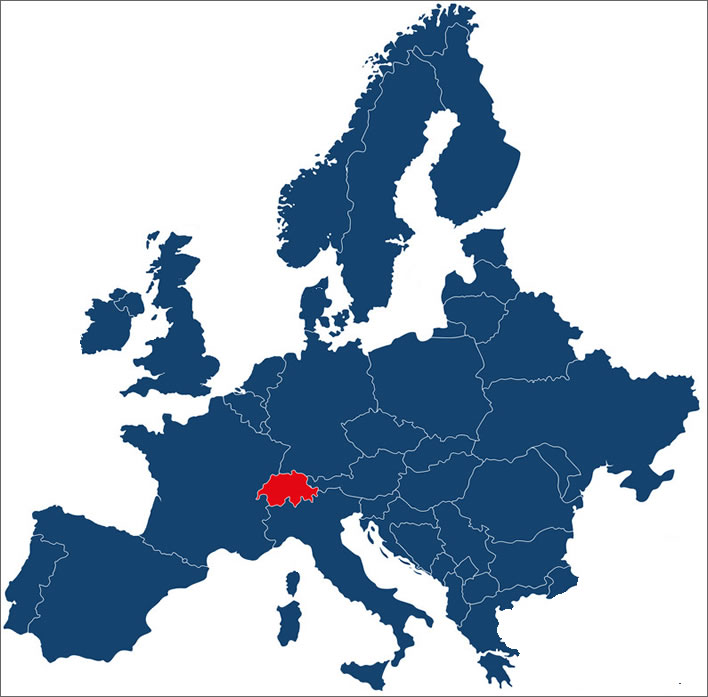
But the EU is not a stable monolith: many of its members are in internal turmoil as a result of immigration, welfare costs, demographic change – a turmoil that is getting worse every year, although EU politicians don't like to talk about such things; most of its countries have erratic proportional representation systems that with current demographic forecasts will produce ungovernable instability or probably even civil war. In such a world, Switzerland could easily find itself roped into an alliance that it would never have chosen in the good old neutrality era. Let's not even think about Germany, now attempting to become the leading military power in Europe, nor NATO, which is currently in an advanced state of decomposition.
Worse still, scuttling into the protective embrace of the EU has its costs. The EU, suffused with leftist, bureaucratic control freakery, will always call the tune with plucky little Switzerland, whether as an EU member or some sort of military ally. If there were ever a falling out, the EU does not need drones or the instruments of war: with appropriate sanctions on transport, on financial matters and energy sharing, Switzerland could be defeated in a couple of weeks without a shot being fired. As President Trump might put it: 'Switzerland has no cards'. Switzerland will always have to submit to the EU – just look at the map.
Looking at it from a potential partner's point of view, an alliance with Switzerland would bring one frustration after another. As we have seen in the embarrassing case of Switzerland's new fighter jets, a timely referendum has the ability to reduce years of planning to rubble.
Let's think even more of the unthinkable. During the present period of reflection and self-examination, Switzerland also has to ask itself just how long the EU will survive in its present form. If there is one certain lesson of history it is that empires eventually crumble.
In the good old days of slow technological evolution, an empire might last a few centuries before it fell apart. The world moves much faster these days: the accelerating technological development of the twentieth century rapidly produced new empires with new vulnerabilities. In the case of the EU we can already see clearly all the precursors of its doom: demographic and economic collapse, political, social and cultural replacement, over-regulation, declining innovation. The EU will collapse, whether with a bang or a whimper (or perhaps with both) is at the moment unknown, but collapse it will. And it will do so within a few decades, not centuries.
Once the monolith which at the moment surrounds it starts breaking apart, Switzerland, if it is still surviving, will have some interesting decisions to make, decisions which no amount of triangulation will ever solve. Let's hope that the great brains of the government have worked out the 'what, which and whom questions' by then.
0 Comments
Server date and time:
Browser date and time:
Input rules for comments: No HTML, no images. Comments can be nested to a depth of eight. Surround a long quotation with curly braces: {blockquote}. Well-formed URLs will be rendered as links automatically. Do not click on links unless you are confident that they are safe. You have been warned!