
Rainer Maria Rilke
Richard Law, UTC 2026-08-27 08:17
The hundredth anniversary of the death of the writer Rainer Maria Rilke (1875-1926) falls on 29 December this year. He was a complicated person who led a complicated life and wrote complicated poetry, so I am allowing myself a good run up to the date itself. Many German-speaking literary types are devout worshippers of Rilke, whereas most of the Anglophone world knows nothing about him. Let us begin with a simplified overflight of his complicated childhood. In the second article we'll fetch the sal volatile from the medicine cupboard and overfly his adult years. A third piece discussing his work may arrive at a later date – or not, as the case may be.
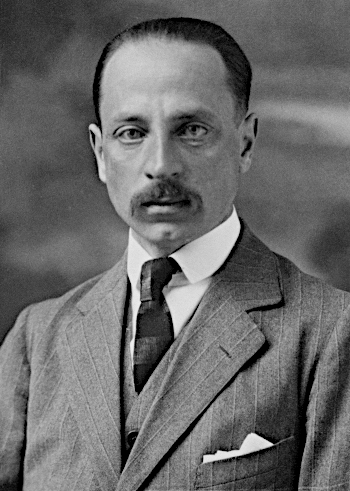
Rainer Maria Rilke, passport photograph, 1919
Image: Schweizerisches Rilke-Archiv
Prologue
'Issues from the hand of God, the simple soul', T.S. Eliot told us in his poem 'Animula' (1929), going on to describe the accretions that life brings, the 'pain of living and the drug of dreams' until the simple soul 'issues from the hand of time ... irresolute and selfish, misshapen, lame', finally 'living first in the silence after the viaticum'.
Eliot had a gloomy disposition only made bearable by a devout Christian hope that something better must follow our sordid earthly lives. The title, Animula, 'little soul', alludes to a poem by the dying Emperor Hadrian (76-138, he of the Wall), which begins Animula vagula blandula, 'Poor little, wandering, gentle soul' (c.138). In the poem, Hadrian feared for the fate of his soul, which after his death would become Pallidula rigida nudula / Nec ut soles dabis iocos, a pallid, stiff, naked little thing, with no more joking.
Note the stylish symmetry in the descriptions of the living and the dead soul: animula vagula blandula | pallidula rigida nudula. Ah, the good old days, when the rulers of the West could knock off a respectable poem.
The point here is, however, that the heathen Hadrian had no hope of anything better for his soul after death, whereas for the Christian Eliot, his soul would begin truly living only after death.
Eliot's first line is an adaptation of Dante's (1265-1321) description in Purgatorio (c. 1321, ll. 85-90) of a loving God sending an innocent soul into the world: Esce di mano a lui che la vagheggia / prima che sia … l'anima semplicetta che sa nulla, 'From the hand of Him who looks at it with love before it lives … the simple infant soul that has no knowledge'.
In the life of Rilke, we can observe the little, wandering, gentle soul that came into the world in 1875 being battered and deformed from infancy onwards. His obsessive introspection and his inhuman, monomaniacal drive to set something of himself down on paper left a remarkable legacy despite early humiliations and many subsequent setbacks. His early death at the age of 51 was itself a vale of tears.
The journey of Rilke's soul from simplicity to one that was 'irresolute and selfish, misshapen, lame' divides into two halves: 1875-1900, childhood and education; 1901-1926, life and literature. There may be a third article, intended to finish off the few readers who may still be standing.
Note
These articles are not intended to be a rigorous Rilke biography. For anyone who reads German there are plenty of biographies around, the most recent examples being by Manfred Koch (Koch, Manfred: Rilke, Dichter der Angst, Verlag C.H.Beck oHG, München 2025.) and Sandra Richter (Richter, Sandra: Rainer Maria Rilke oder Das offene Leben, Insel Verlag Anton Kippenberg GmbH und Co. KG, Berlin, 2025).
Where not explicitly stated, images are from the Deutsches Literaturarchiv, Marbach or the Rilke-Archiv in the Schweizerische Nationalbibliothek.
0 Comments
Server date and time:
Browser date and time:
Input rules for comments: No HTML, no images. Comments can be nested to a depth of eight. Surround a long quotation with curly braces: {blockquote}. Well-formed URLs will be rendered as links automatically. Do not click on links unless you are confident that they are safe. You have been warned!